
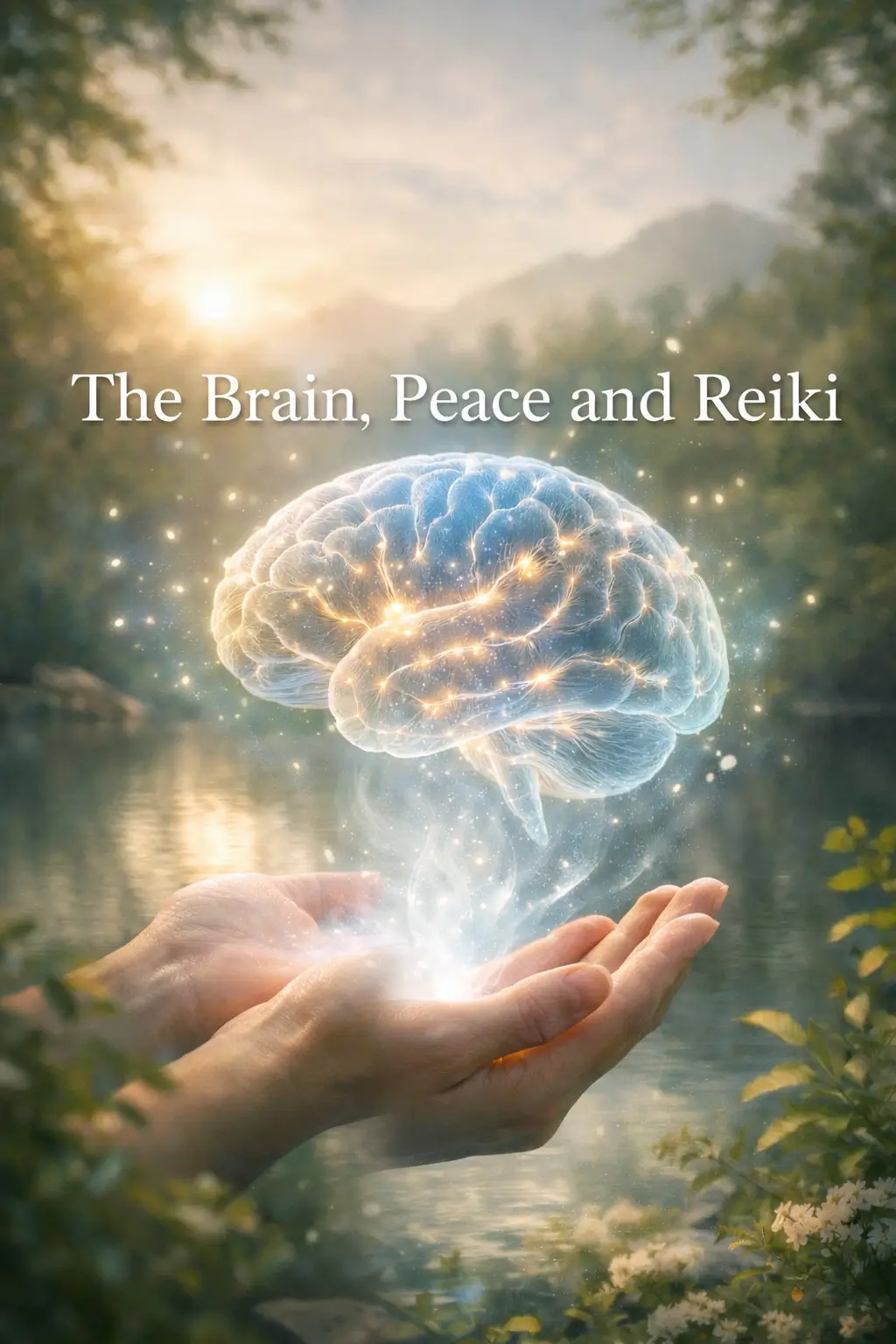
The Science of What the Mind Seeks
By Julie Russell
Reiki Master Teacher & Founder, Sacred Mirror Technique™
Reiki Verde Valley – Cottonwood, AZ
The Mind Searches for What It Believes
Modern brain science shows that the mind does not passively observe reality it actively searches for evidence that confirms what it expect
Neuroscience calls this confirmation bias and selective attention, influenced by the brain’s Reticular Activating System (RAS) a filtering network that decides what enters conscious awareness
If the mind is conditioned toward stress, fear, worry, or over-thinking, it will unconsciously scan the world looking for proof of these states. But when the mind is gently conditioned toward peace, calm, gratitude, and safety, the brain begins to notice and reinforce those experiences instead. What you repeatedly feel becomes what your brain looks for.
The Hypnagogic State — The Gateway to the Subconscious
There are two naturally powerful windows each day when the brain becomes highly receptive: early morning just before waking, and at night just before sleep. This is known as the hypnagogic state, the transition between waking and sleep when brain waves shift from active beta state to slower alpha and theta brain wave states.
In alpha and beta states the analytical mind quiets, emotional imprinting increases, the subconscious becomes receptive, and neural encoding deepens. The emotional tone you hold during these moments strongly influences stress regulation, emotional stability, thought patterns, and perception of reality.
Reiki and the Brain — A Regulating Influence
Research on meditation and calming practices such as Reiki shows activation of the parasympathetic nervous system, reduction in stress reactivity, improved emotional regulation, and greater neural coherence. Even five minutes of Reiki with calm and gratitude can gently shift the nervous system toward regulation. Over time, the brain begins to associate calm with safety and stillness with stability.
Neuroplasticity — The Brain Learns What You Repeat
Neuroscience confirms the brain rewires based on repeated emotional and mental states. Neurons that fire together, wire together. Repeated moments of calm, gratitude, gentle awareness, and self‑Reiki strengthen neural pathways for emotional steadiness and reduce automatic stress scanning.
The Power of Five Minutes
You do not need long sessions. Just five quiet minutes in the morning and evening with gentle Reiki, slow breath, gratitude, and calm awareness can gradually condition the brain toward peace.
Mikao Usui — The Secret Art of Inviting Happiness
Mikao Usui described Reiki as ‘The Secret Art of Inviting Happiness.’ The Reiki precepts guide the mind toward not worrying, not angering, gratitude, compassion, and honest living. These are not only spiritual principles, they are neural conditioning practices.
Simple Daily Practice
Morning and Evening:
1. Sit quietly for 5 minutes
2. Place hands gently (self‑Reiki)
3. Slow the breath
4. Feel gratitude
5. Rest in calm awareness
Let peace be the signal you give your mind. Over time, your brain will begin to seek peace naturally.
Sacred Mirror Closing Reflection
Peace is not something you chase. It is something you teach the mind to recognize.
In the quiet spaces just before waking or just before sleep, the doorway opens. Here, the mind softens. Here, the heart steadies. Here, the nervous system remembers safety.
Each small moment of Reiki, gratitude, and calm becomes a gentle instruction to the brain: Peace is safe. Calm is natural. Stillness is home.
Just as Mikau Usui taught, happiness is invited.
